
- Home
- 5 Incubation Mistakes That Are Killing Your Biopesticide and Biofertilizer Before It Reaches the Field

Aditi Bijalwan
Co-founder at Agrilogy Bioscience Private Limited
Let’s be direct for a moment. We have all experienced this.
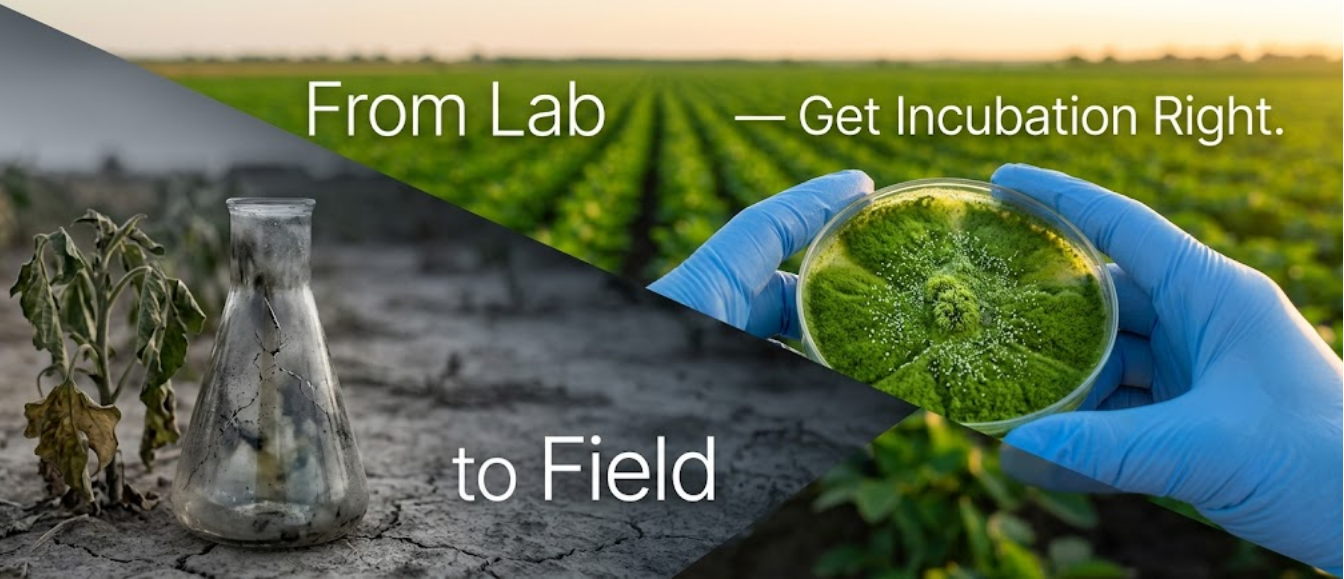
You inoculate a bioreactor with a promising Bacillus subtilis strain for a biopesticide, or a Rhizobium culture for a biofertilizer. You set the incubator, walk away, and expect a high-yield batch of viable cells. You return 24 to 48 hours later expecting a dense, active culture, and instead, you are looking at a weak, contaminated, or completely dead batch.
We tend to blame the strain or the fermentation vessel. But usually, the issue may be in the environment.
In industrial microbiology, incubation is not merely "keeping things warm." It is a precise cultivation of life. If you do not respect the physiological requirements of your organism, they will not produce the results you need.
And for biopesticides and biofertilizers, a failed batch means a failed crop season for the farmer.
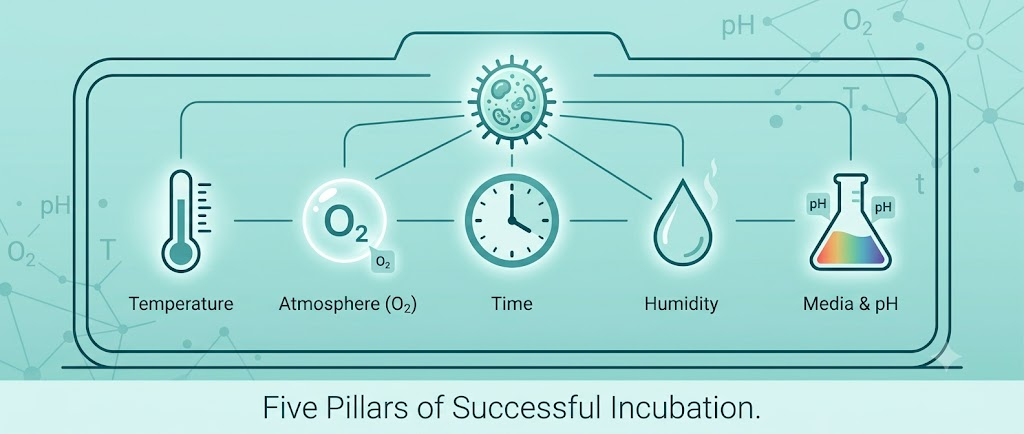
Here is a detailed look at the five pillars of incubation that separate a novice mistake from a reliable, field-ready product.
1. Temperature: The Narrow Window
Enzymes are highly specific. They have an optimal thermal range, and if you move outside of it, you are not just slowing growth down—you are denaturing proteins.
For biofertilizers, we often work with Rhizobium or Azotobacter. For biopesticides, Beauveria bassiana or Metarhizium anisopliae. Each has a specific thermal requirement.
- The Standard:Rhizobium (25–30°C), Bacillus thuringiensis (28–32°C), Trichoderma (25–28°C).
- The Reason: Lipid membranes are dynamic structures. At lower temperatures, the membrane solidifies, halting nutrient transport. At higher temperatures, the membrane breaks down and the cells die.
- The Nuance: A fluctuation of just 1–2°C can alter the expression of key traits.
For a biopesticide like Bacillus thuringiensis, the temperature must be precise because it affects the production of the delta-endotoxin crystal—the actual active ingredient that kills the pest. If the temperature is wrong, you grow the bacteria, but you get no toxin.
2. Atmosphere: It Is Not Just About Oxygen
This is where most production runs make errors. We assume "air" is the default. But for many beneficial microbes, oxygen levels dictate whether they work for you or against you.
- Aerobes:Pseudomonas fluorescens (a common biofungicide) requires high oxygen transfer. You need proper aeration and agitation.
- Microaerophiles:Azospirillum (a biofertilizer) prefers low oxygen tensions. If you blast it with too much air, it stops fixing nitrogen.
- Anaerobes:Clostridium pasteurianum (a nitrogen fixer) is killed by oxygen. You need strict anaerobic conditions.
- The Biopesticide Factor: For Beauveria bassiana, the fungus needs oxygen to sporulate. If you incubate it in a sealed, low-oxygen environment, you get mycelial growth but no spores. And spores are what you sell to the farmer. "No spores = no product."
3. Time: The Patience Requirement
The textbook says "24–48 hours." But the textbook does not account for your specific strain's lag phase or the need for sporulation.
- The Fast:E. coli can double every 20 minutes. You will see turbidity overnight.
- The Slow:Trichoderma harzianum takes 5–7 days to fully sporulate. Rhizobium can take 3–5 days to reach peak cell density.
- The Risk: If you harvest too early, you get a low concentration of viable cells. If you harvest too late, the cells enter death phase, or the medium dries out, and you lose the product.
Practical Tip: Do not just look at the clock. Look at the cell morphology. Are the cells in log phase? Are they forming spores? For biopesticides, you need to wait until the spore count is maximized, not just the vegetative cell count.
4. Humidity: The Essential Factor
This is the factor that gets ignored until your solid-state fermentation substrate looks like a cracked, dry surface.
For biofertilizers and biopesticides, we often use solid-state fermentation (e.g., on rice husk, vermiculite, or peat). If your incubator has low humidity, the substrate dehydrates.
- The Solution: Use a water tray in your incubator or maintain humidity at 60–70% relative humidity.
- The Result: Proper humidity ensures that the substrate retains enough moisture for the microbes to grow and sporulate. If the substrate dries out, the microbes stop growing, and your final product will have a low colony-forming unit (CFU) count.
5. Media & pH: The Nutritional Requirements
You would not expect a nitrogen-fixing bacterium to thrive on a high-sugar medium. Why expect a biofertilizer to grow on a general-purpose agar?
- Rhizobium: Requires a specific yeast extract-mannitol medium. It needs the right carbon source to fix nitrogen.
- Bacillus thuringiensis: Requires a specific medium for toxin production. The pH must be neutral to slightly alkaline (pH 7.0–7.5).
- Trichoderma: Prefers a slightly acidic pH (pH 5.5–6.5) to outcompete other fungi.
- The Biopesticide Factor: If the pH is incorrect, the enzymes will not function. If the nutrients are missing, the organism will not produce the secondary metabolites (like antibiotics or toxins) that make it a biopesticide. You will just get biomass, not a functional product.
The Consequences of Incorrect Conditions
Let’s review the failure modes in the context of biopesticides and biofertilizers:
- Poor Growth: You observe the batch, call it "low yield," and send it to formulation. But the cell count was too low to be effective in the field. The farmer sprays it, and nothing happens.
- Missed Sporulation: A Beauveria batch that grew well but did not sporulate. You have a product that cannot survive storage or infect the target pest.
- Misleading Results: A Rhizobium batch that grew well but did not fix nitrogen because the oxygen or pH was wrong. You have a product that colonizes the root but does not feed the plant.
- Contamination: A batch that was incubated at the wrong temperature and became overgrown with a contaminant. You have a product that is not just ineffective—it might be harmful.
The Final Takeaway
Incubation is not a passive step. It is an active experiment.
The next time you load an incubator for biopesticide or biofertilizer production, do not just think of it as a warm box. Think of it as a controlled biological system. You are responsible for that environment. Provide the correct temperature, the correct gas mix, the correct time, and the correct nutrients.
Do that, and the microbes will provide you with a high-yield, viable, and effective product that works in the field.
Observe. Understand. Identify. Apply.
Comments (0)
No comments yet. Be the first to comment!
Search Blogs
Recent Blogs
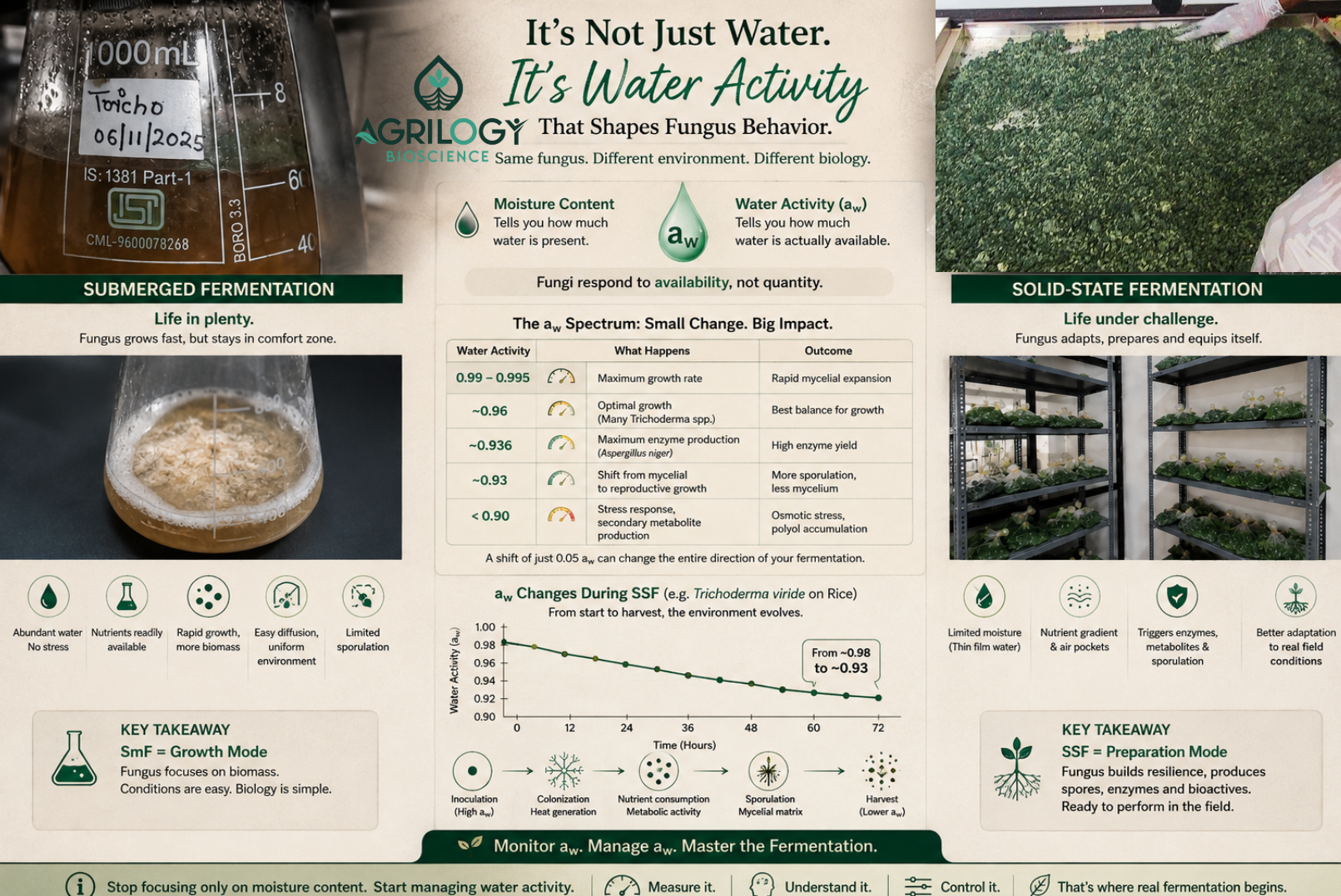
The Biology of Water Activity
August 7, 2026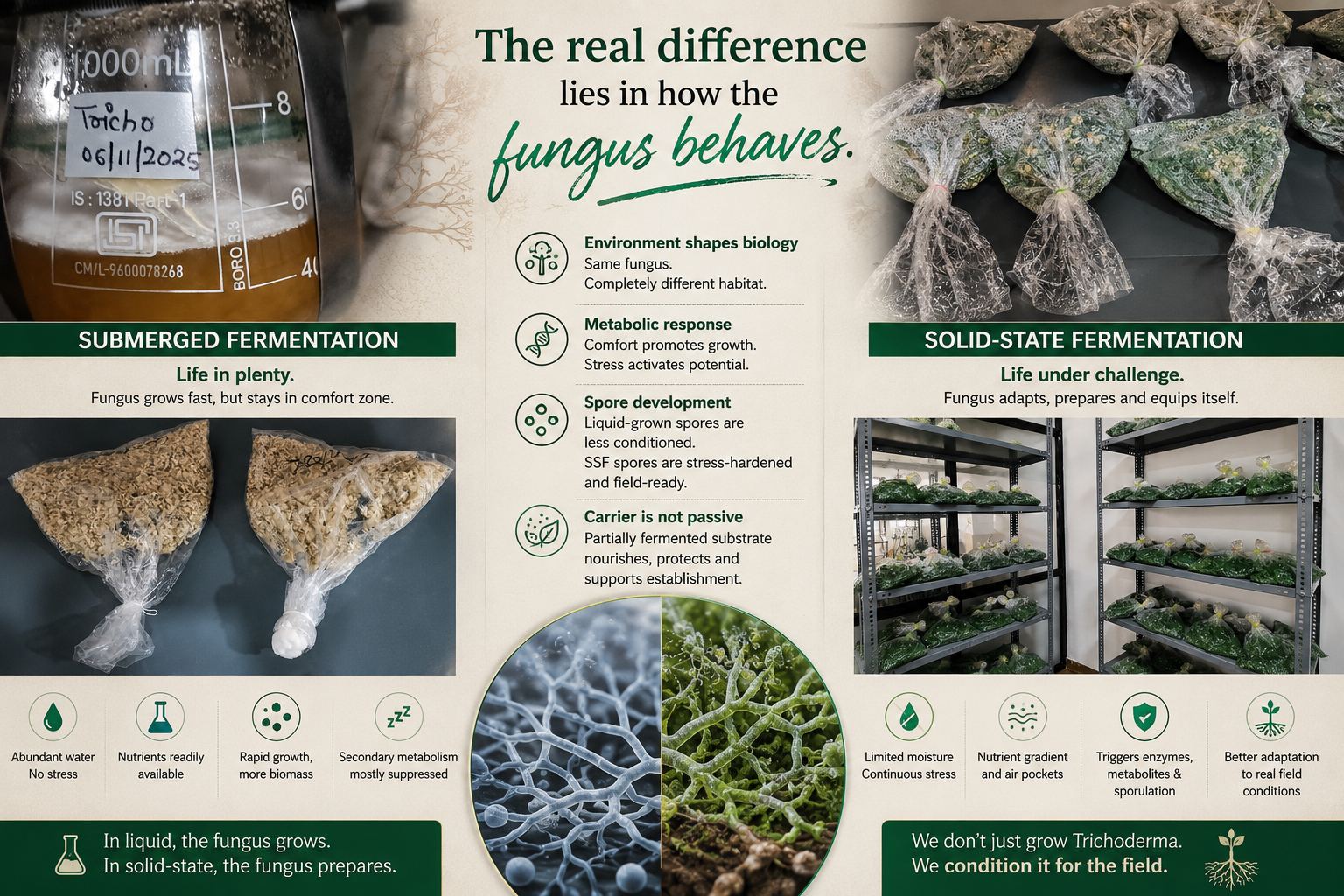
What the Green on Our Trays Is Really Telling Us
July 29, 2026
Leave a Comment