
Mastering Mycorrhiza Technical: The Science of Carriers, Spores & Soil Success
Why Carrier Selection and Formulation Integrity Determine Field Success?
What if the key to reducing phosphate fertilizer dependency wasn't a new chemical discovery, but rather the optimized formulation of a 450-million-year-old biological partnership? Endomycorrhizal fungi (VAM) offer this exact promise—but only when technical specifications align with agricultural realities.
The difference between VAM as a concept and VAM as an effective agricultural input lies in the precise science of carriers, spore viability, and formulation integrity that determines whether these microscopic allies survive storage, application, and establishment in competitive soil environments.
This gap—between the biological potential of mycorrhiza and its real-world agronomic performance—is where formulation science becomes not just relevant, but essential.
What Is Endomycorrhiza (VAM)?
Imagine a natural, microscopic network that acts as a root extension, reaching far into the soil where roots cannot go. That's VAM. These fungi form intricate structures inside the root cells (vesicles for storage, arbuscules for nutrient exchange) and extend their hyphae outward, effectively increasing the root absorption area by up to a hundred times.
Their primary role? To facilitate the uptake of phosphorus, water, and other immobile nutrients, while the plant provides them with carbohydrates. It's a perfect, ancient partnership.
But in the lab, this partnership is a promise. In the field, it’s a challenge. VAM as a concept is robust. VAM as an input is fragile—until it’s strategically formulated.
The Formulation Bridge: From Concept to Crop
A high-quality spore alone is not a product. It’s a living organism that must endure:
- Storage – often for months, in variable temperatures
- Mixing – with fertilizers, pesticides, or other inputs
- Application – through seed treaters, sprayers, or granular spreaders
- Establishment – in soils that may be chemically imbalanced, dry, or microbiologically competitive
This journey is where carrier science makes or breaks the investment.
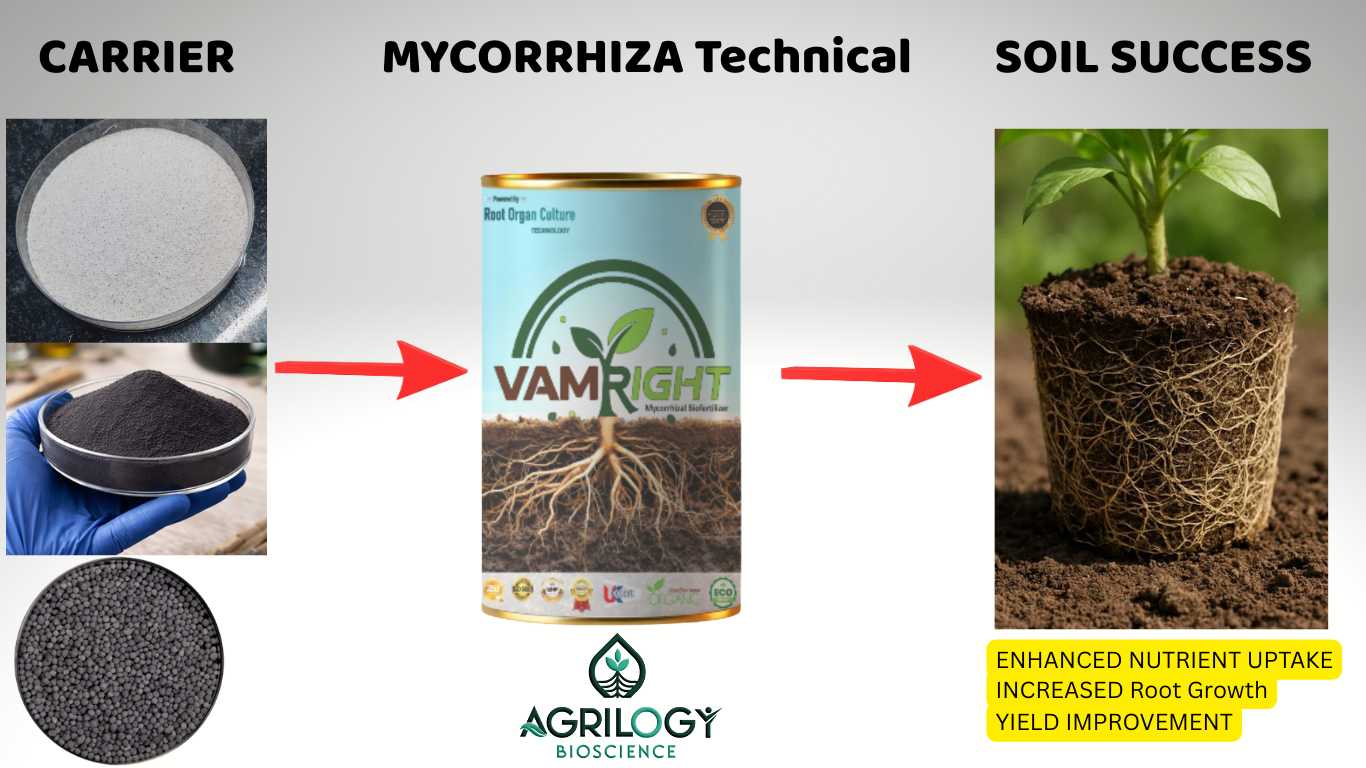
The Crucial Role of Carriers: More Than Just a Delivery System
In technical VAM formulations, the carrier is not inert filler. It’s a viability engine, a protective habitat, and sometimes, a synergistic soil amendment.
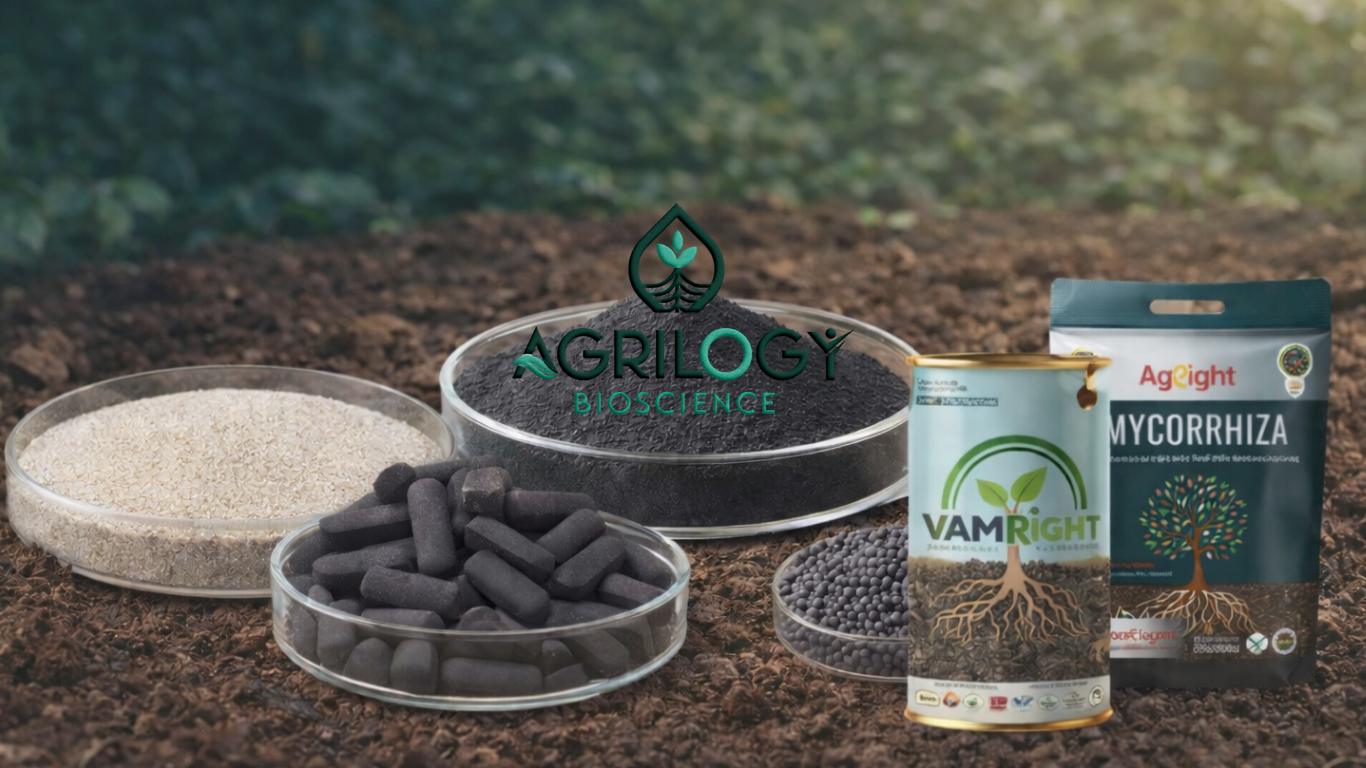
- Dextrose/Root Mass Base: The carrier of choice for high-concentration technical products. Dextrose isn’t just a powder—it’s a hygroscopic buffer that maintains spore dormancy and prevents premature activation during storage. Used in B2B blending, it ensures that when the product is finally used, the spores are as viable as the day they were packaged.
- Talc-Based Carriers: Excellent for flowability and seed coating, talc helps in even distribution. But alone, it’s passive. That’s why in advanced formulations, talc is often combined with humates or organic nutrients to create a microenvironment that supports the spore immediately upon hydration.
- Humic Acid Base: This is where carriers transition from passive to active. Humic substances chelate nutrients, improve soil structure, and stimulate root exudates—effectively preparing the soil to “welcome” the mycorrhiza. A spore delivered in a humic carrier has a higher chance of germination and colonization because its environment is already primed for success.
- Granular Organic Carriers (Manure/Compost): These provide a slow-release launchpad. As the granule breaks down, it releases the inoculant gradually into the rhizosphere alongside organic matter, mimicking a natural, nutrient-rich fungal habitat.
Decoding High-Quality Agrilogy Bioscience`s Mycorrhiza Technical Specifications: It’s Not Just About Spores/Gram
Yes, spore count matters—it’s the density of potential. But viability percentage matters just as much. A product with 50,000 spores/gm and 95% viability is far superior to one with 1,00,000 spores/gm and 40% viability.
This understanding is why high-quality Glomus-based Agright VAM technicals are strategically tiered.
At the pinnacle is the Research or Elite Grade, featuring ultra-high concentrations of around 1,00,000 spores/gram in a dextrose or rootmass base, designed for premium blends, seed treatment concentrates, and critical R&D work.
For large-scale commercial production, the Manufacturing Grade offers a robust balance, with spore counts ranging from 33,000 to 45,000 per gram in a similar dextrose carrier, optimized for cost-effective B2B manufacturing of biofertilizers and custom mixes.
Finally, for direct on-farm use, the Field Application Grade is formulated for practicality, offering spore counts between 2,500 and 10,000 per gram in a talc or humic-acid base, creating ready-to-use products that are easy for farmers to apply to soil or seed.
Each tier serves a distinct purpose in the chain from lab to land.
For direct field use, formulation is simplified for ease but still precision-engineered:
- 2500 spores/gm: 50-100 gms/acre
- 500 spores/gm: 150-300 gms/acre
The lower the spore concentration in the end product, the more critical the carrier’s role in protecting each spore and enhancing its establishment.
Why This Technical Precision Is Non-Negotiable?
Choosing a VAM product based on concept alone is a gamble. Choosing based on formulation science is an investment. Here’s what integrity in formulation ensures:
- Shelf-Life Stability: Spores remain dormant and viable for 18-24 months.
- Compatibility: The formulation does not antagonize common fertilizers or biostimulants in tank mixes.
- Soil Survivability: Carriers can include root exudate stimulants or microbial protectants that help spores outcompete native soil microbes.
- Colonization Speed: Enhanced formulations can reduce the colonization timeline from 4-6 weeks to 2-3 weeks—a critical factor in short-cycle crops.
The Essential Truth: VAM's Success is Engineered, Not Guaranteed
Endomycorrhiza isn’t magic—it’s living technology. While VAM holds the natural promise of better nutrient uptake and soil health, that potential only becomes real crop performance through smart engineering.
Success depends on precise formulation: the right carrier, protected spore viability, and a recipe that supports life from the bag to the soil.
For farmers and agronomists, this means looking beyond the spore count.
- Ask how the product is made.
- Demand details on the carrier,
- Proof of viability, and
- Clear application guidelines.
In biological agriculture, what surrounds the spore matters as much as the spore itself.
At Agrilogy Bioscience, we engineer VAM to perform. With years of R&D, our formulations ensure shelf-stable, field-ready mycorrhiza that delivers on nature’s promise—reliably. Let’s match the right formulation to your fields.